
Blog
Wall-Mounted vs Portable Garage Vacuums: Which One Gets Used

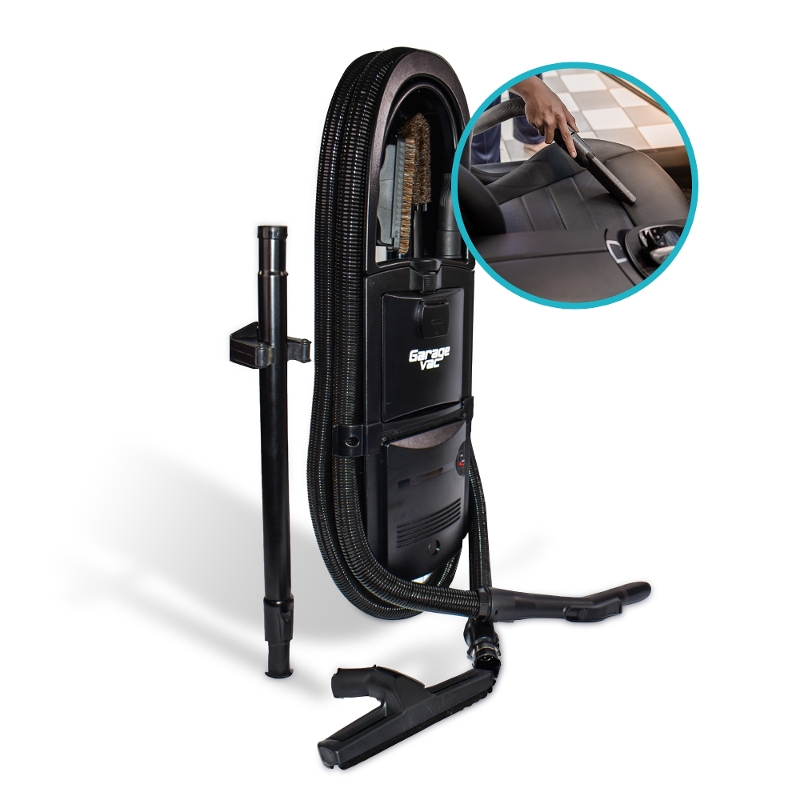
Ask someone why they stopped using their garage vacuum and you will rarely hear a complaint about suction. You hear that it was in the way, that the cord was too short, or that dragging it out was more trouble than the mess. Convenience decides this category, which is why a wall mounted garage vacuum and a portable shop vac end up being used so differently.
Here is the comparison as we would give it to a friend, including the cases where the portable is the right answer.
Floor space is the first difference
A portable unit occupies floor permanently. Even a compact shop vac takes a square foot, and it never sits where you want it, because that spot is also where you park. Over time it migrates behind the mower and stops being reachable.
A wall mounted garage vacuum takes none of your floor. It sits above the work, out of the way of tires, spills, and shovels. In a tight two-car garage, that alone changes how often the thing gets used.
Hose reach versus dragging the machine
With a portable, the machine follows you. Every car interior means unplugging, moving, and re-plugging. With a wall-mounted system, the hose does the travelling. Our GH120 ships with a 35+ ft stretch hose, which reaches both vehicles in a standard two-car bay from one mounting point.
The hose also retracts back into the housing, so there is no coiling and nothing left on the floor. It sounds like a small thing. In practice it is the difference between a two-minute job and a ten-minute one.
Where the portable genuinely wins
We should be fair about this. A portable shop vac is the better tool when:
- You need to pick up liquid, which no dry central system should ever do.
- You work in more than one location, or on job sites.
- You are collecting from a tool port on a table saw or planer.
- You rent, and drilling into the wall is not an option.
If any of those describe you, buy the portable and do not feel bad about it. Plenty of shops run both.
Noise and where the exhaust goes
A shop vac sits at ankle height and blows its exhaust across the floor, which lifts the fine dust you just missed and puts it back in the air. You are also standing right next to the motor.
A wall mounted garage vacuum puts the motor above head height and directs exhaust through a filter away from the work area. The unit is still audible, but you are not leaning over it. In a closed garage that difference is noticeable within a minute.
Filtration and emptying
Most portables are bagless. Emptying a bagless canister in an enclosed garage releases a cloud of exactly the fine material you were trying to remove. Anyone who has done it in shorts knows the feeling.
Bagged systems avoid that entirely. You open the door, pull the sealed bag, and drop it in the trash. Our systems use a five-layer fiber bag backed by a motor filter and an exhaust filter, so the fine dust stays captured. The bags fit the model rather than the brand, so check the bag range before you order.
Cost over five years, not five minutes
A budget shop vac costs less on day one. Over five years the maths shifts. Portables in daily garage use tend to get replaced, because the hose splits, the wheels break, or the motor takes in water. Wall units are bolted down and out of harm’s way, and every component on ours is a stocked replacement part.
The GarageVac GH120 is $279 and carries a two-year warranty on the unit. Bags run a few dollars a month in typical use. That is the honest running-cost picture.
Installation is smaller than people expect
The GH120 is self-contained, which means the inlet is built into the unit and there is no pipe to run. You need two anchors into studs and a standard 120V outlet within reach. Most owners have it mounted and running inside half an hour.
Because it is self-contained, it does not take a VacPort or inlet valves. Those belong to our piped systems, such as the InterVac Pro. It is worth knowing before you buy accessories.
Questions about wall-mounted units
Will it hold on drywall?
Mount into studs, not into drywall anchors alone. The load is not the weight of the unit, which is around 9 lb, but the sideways pull from the hose several times a week. On block or concrete, use masonry anchors rated well above the unit weight.
Can I move it later?
Yes. A self-contained unit needs only two anchor points and a 120V outlet, so relocating it means patching two holes. That is worth knowing if you are unsure about the position and want to live with it for a season first.
What if I rent?
A portable is the honest answer, or a landlord conversation. Drilling into a garage wall is a small job, but it is still a permanent alteration, and appliance safety guidance from the Consumer Product Safety Commission is worth reading before you improvise a temporary mount.
Does a wall unit need pipe?
Not on a self-contained model. The inlet is built into the housing, so there is no pipe, no inlet valves and no low-voltage wiring. That is what makes a half-hour install possible.
The deciding question
Ask yourself one thing: will you carry this machine to the mess, or should the hose come to you? If the honest answer is that carrying it will eventually stop happening, a wall mounted garage vacuum is the one you will still be using in five years.
Compare the models on our garage vacuums page, or read our breakdown of what makes a garage vacuum work well.