
Blog
A Yearly Central Vacuum Maintenance Schedule

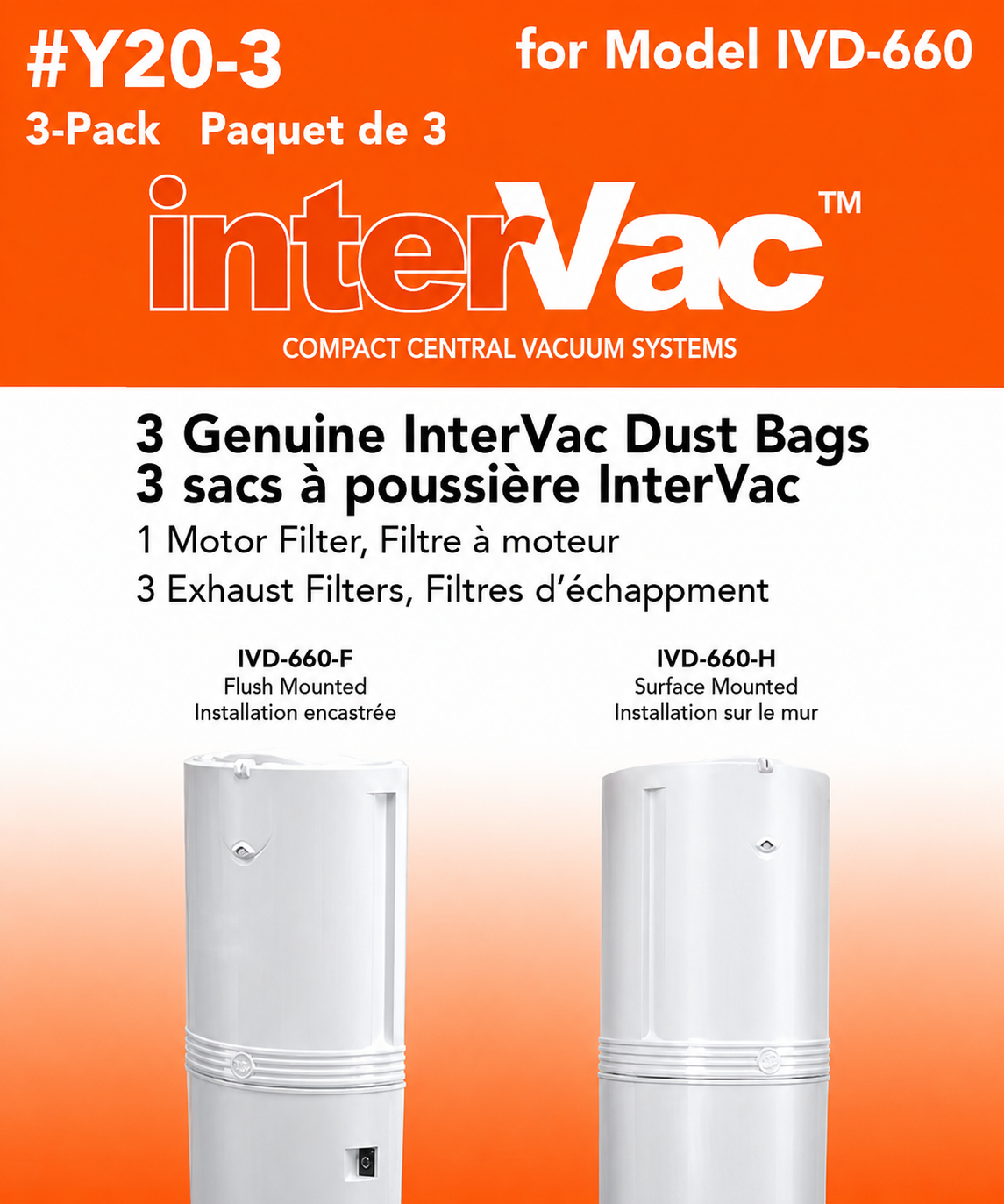
A central system asks very little of you, which is exactly why it gets neglected. There is no dust cup to empty and no visible reminder that anything needs doing. Sensible central vacuum maintenance is about ten minutes of work spread across a year, and it is the difference between a unit that lasts a decade and one that limps.
Here is the whole schedule.
Every bag change: two minutes
Change the bag every three to four months in a house, or every six to eight weeks in a garage, workshop, pet household or coach. Do not wait for it to look full, because airflow drops long before that.
While the door is open, wipe the door gasket and check it for cracks. Then look at the seat where the bag collar sits and clear any debris. Both take seconds and both prevent bypass.
Every fifth bag: thirty seconds
Change the motor filter. This is why our 5-packs ship five bags and one filter together, so the pack itself is the schedule.
Ours are model-specific. Y21 for the GarageVac, RM, F and H families. Y22 for the RoadVac CS line. Y25 for the InterVac Pro, IVD660 and CondoVac.
Every six months: fifteen minutes
Three jobs, none of them difficult.
- Walk the inlets. Open each one, check the gasket, confirm the door closes squarely and the contacts are clean. One inlet not sealing weakens every other inlet in the house.
- Inspect the hose. Check both cuffs for cracks. Then run the unit, block the hose end, and slide your hand along the length to feel for a leak. Our hose care guide covers the rest.
- Clear the tools. Pull hair from any turbo brush roller and check the floor tool brush strip for wear.
Once a year: thirty minutes
Change the exhaust filter. The Y41 covers the H, F, RM, GV and GH families, and the Y50 covers the IVD660 and Pro. The RoadVac CS line has none by design and uses an overboard exhaust option instead.
Then check the power cord and plug for damage. Any appliance with a cracked housing or a damaged cord should come out of service, which is the standard advice the Consumer Product Safety Commission gives for household equipment generally.
Finally, vacuum the outside of the unit and clear the area around it. A power unit packed in behind boxes runs hotter than it should.
Listen to it once a year, deliberately
Run the unit with the hose disconnected and pay attention to the sound. A healthy motor is steady. Roughness, a rising pitch, or a new rattle are all worth investigating before they become a failure. Motors, boards and switches are stocked parts for every system we have built.
Never, at any point
- Do not vacuum liquid with a dry system, including damp carpet or melting snow.
- Do not pick up drywall dust, fireplace ash or plaster in quantity. They pass through bags and coat filters instantly.
- Do not vacuum anything smouldering, obviously, and give barbecue ash a full day longer than you think it needs.
- Do not push rigid objects down a hose to clear a blockage.
Those four rules cause more damage between them than ordinary wear ever does.
Write the model number down
The most useful two minutes of central vacuum maintenance is writing your model number somewhere near the unit, on the inside of the door or on the wall beside it. Every bag, filter and part order starts with that number, and nobody remembers it three years later.
If you have lost it, send us a photo of the plate through the contact page and we will identify it, including models that no longer have a product page.
Maintenance questions
What if I have not done any of this for years?
Start with a bag, a motor filter and an exhaust filter, all at once. Then do the six-month walk-round. Most neglected systems come back to full performance from those two steps alone.
Can I service the motor myself?
Brush replacement is within reach of a confident owner on some units, but disconnect the power and work to the manual. If you are unsure, the whole motor assembly is a stocked part and swapping it is often simpler than a partial repair.
How long should a power unit last?
With bags and filters changed on schedule, many years of household use. The systems that fail early are almost always the ones run against a restriction for months at a time.
Should I keep spares?
One spare bag pack, always. Beyond that, a spare motor filter and a spare inlet gasket cost little and remove the two most common reasons a small problem becomes a long one.
What is the one job people skip?
The exhaust filter. It is annual, it is out of sight, and it is the stage that determines what goes back into the room. Put it on the calendar with something else you already do yearly.
Keeping records
Write the date of each bag change on the inside of the door, or keep a note on your phone. Two lines of history tell you whether you are on a three-month cycle or a nine-month one, and most people are surprised which it turns out to be.
Record the model number in the same place. Every part order starts with it, and it is the piece of information nobody can recall when they need it.
Keeping it simple
Tie the bag change to something on the calendar, keep a spare pack on the shelf, and do the six-month walk-round when the clocks change. That is the whole system.
Bags and filters for every model are on the replacement parts page, or the bag subscription handles the schedule for you. If something is already not right, work through the weak suction checklist first.