
Blog
Genuine Vacuum Dust Bags vs Aftermarket: What You Are Really Buying

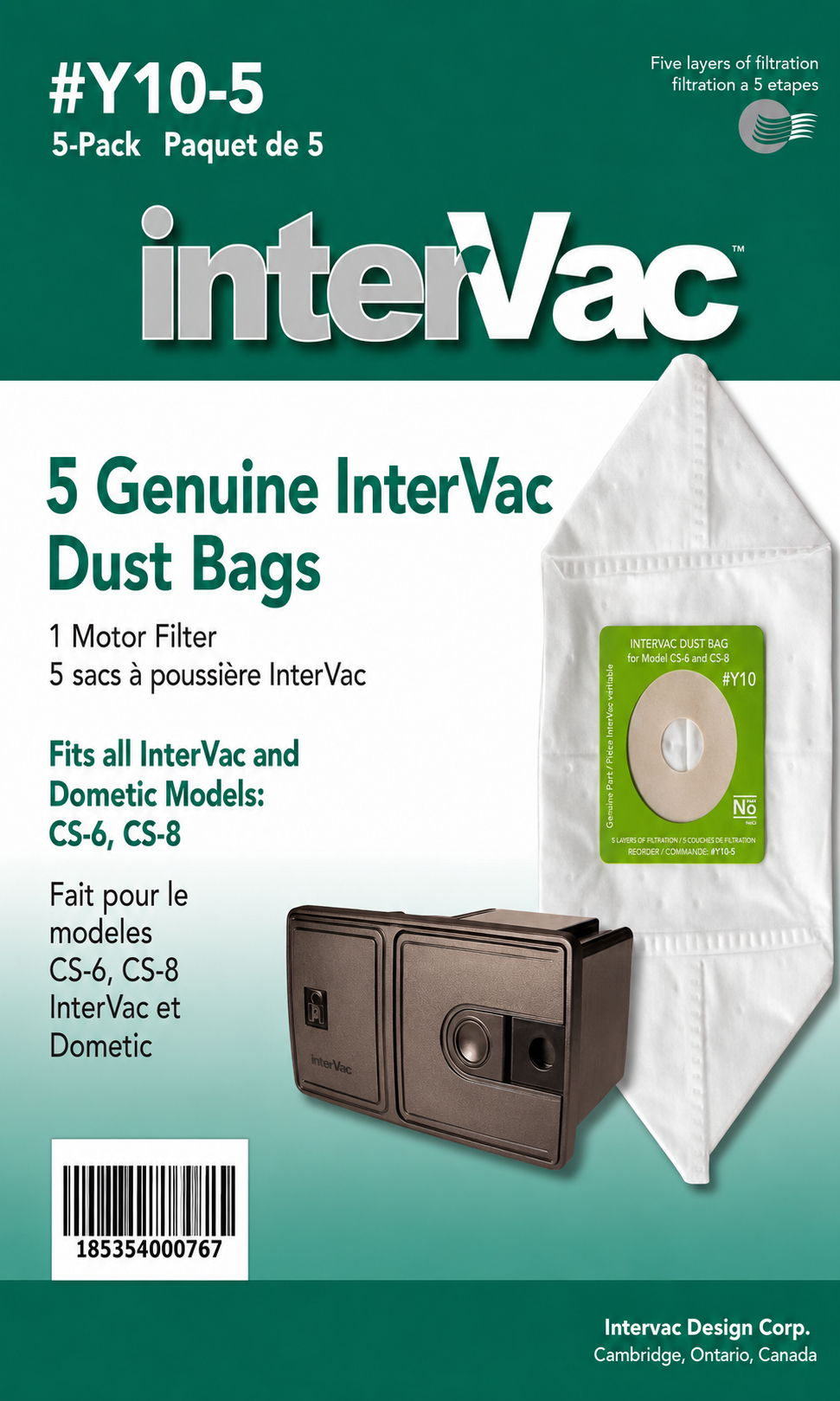
We sell bags, so read this with that in mind. Still, the reasons people give for buying aftermarket packs are usually about price, and the reasons they come back to genuine vacuum dust bags are usually about something else entirely. It is worth setting out what actually differs, so you can decide for yourself rather than on brand loyalty.
Four things change. Only one of them is price.
The collar has to seal, not just fit
A vacuum bag has a cardboard or plastic collar that seats against the inlet inside the unit. If that seal is imperfect, unfiltered air takes the easy path around the bag instead of through it.
Aftermarket collars are usually cut to the same nominal dimension but from different stock, with different tolerances. A collar that is a millimetre off still slots in, so the bag looks correct. Meanwhile a share of your dust is bypassing the bag entirely and heading for the motor filter, which then clogs early.
Bypass is invisible until it is expensive
Nothing about this shows up on day one. It shows up as a motor filter that needs changing twice as often, and eventually as fine grit reaching the impeller. That is the failure mode we see most often on units that have run generic bags for a couple of years.
Layer count changes how long suction lasts
Our bags use a five-layer fiber construction, documented in manual M-10. Layers matter because each one captures a different particle size range, and the fine fraction is what closes the pores in a single-layer paper bag.
A thinner bag reaches the same restriction sooner. So a pack that costs 30 percent less but needs changing 40 percent more often has cost you money, not saved it. Run the arithmetic on your own household before assuming otherwise.
Filter inclusion is part of the schedule
Our packs bundle five bags with one motor filter, because the filter should be changed after every fifth bag. That is not a marketing bundle. It is the maintenance interval, packaged so you cannot forget it.
Most aftermarket packs contain bags only. Owners who switch to them tend to stop changing motor filters altogether, simply because nothing arrives to remind them. Airflow and indoor air quality both suffer, and the EPA’s indoor air guidance explains why the fine fraction is the part you want captured.
Warranty is the blunt one
On our systems, using non-genuine bags or filters voids the vacuum warranty. Our units carry two years of cover, and accessories carry 30 days. If you have registered your unit at our warranty registration page, that cover is worth more than a few dollars a pack.
We would rather say this plainly than bury it. It is a real term, and it is a legitimate part of the calculation.
Buy the right model, genuine or not
Whatever you decide, buy for the model rather than the brand. Our range splits more finely than most people expect:
- Y08-5 for the GarageVac, H-120-E and RM family.
- Y20-3 for the InterVac Pro, IVD660 and CondoVac.
- Y10-5 for the CS-6 and CS-8, single opening.
- Y11-5 for the CS-9, CS-10 and CSRM, double opening.
The Y10 and Y11 are the pair that catches people out. They look nearly identical, and the wrong one leaks straight past the seal.
Questions about bags and packs
How can I tell a good bag from a poor one?
Feel the collar and the paper. A quality bag has a rigid, cleanly cut collar and a fabric-like multi-layer body rather than a single sheet of paper. Thin, floppy stock is the tell, and it is the one that clogs early.
Are all five-layer claims equal?
No, and layer count alone is not the whole story. What matters is the combination of layers and a collar that seats correctly, since a perfect filter medium behind a leaking seal does nothing at all.
Will an aftermarket bag damage my vacuum?
Not immediately. What it does is let more fine dust reach the motor filter, which then clogs sooner, which makes the motor work harder. It is a slow cost rather than a sudden failure, and it is why the warranty term exists.
What about the exhaust filter?
Replace it annually in normal use, or twice a year in a workshop. It is the last stage before the air returns to the room, so a neglected one undoes much of what the bag achieved.
Is the subscription cheaper?
It is priced to be convenient rather than to undercut, and it includes free continental US shipping. Its real value is that the pack arrives before you need it, which is the part most owners get wrong.
One more consideration
There is a practical argument that has nothing to do with quality. A bag that is easy to reorder gets reordered. If your bags arrive from a marketplace listing that disappears, or from a seller who changes the pack contents without telling you, the fitment question comes back every time.
Buying the same pack from the same place removes that friction, and friction is what turns a three-month bag interval into a nine-month one.
The honest summary
If you run a vacuum lightly in a small apartment, an aftermarket bag will probably serve you fine for years. If your unit works hard, in a garage, a shop, a pet household or an RV, the seal quality and layer count start to matter and genuine vacuum dust bags earn their premium.
Our full range is on the replacement dust bags page, and the bag subscription ships them on a schedule with free continental US shipping. If you are not sure which bag your unit takes, send us the model number and we will confirm it.